In surgical training, there’s a moment every resident experiences: the sudden realization that something has gone wrong. In the operating room, that moment can mean quick intervention by an attending, an extended procedure time, or in the worst cases, a complication that affects patient outcomes. But what if residents could experience those critical learning moments without any of those consequences?
This is the promise of high-fidelity surgical simulation with real-time feedback. When a simulator can show you your mistakes as they happen, such as a vascular bleed from an errant cut or a bladder leak from improper dissection, the learning becomes immediate, visceral, and remarkably effective.
Why Mistakes Matter in Learning
Traditional surgical education has long relied on the “see one, do one, teach one” model. While this approach has trained generations of surgeons, it has a fundamental limitation: mistakes in the operating room carry real consequences. This creates a high-stakes environment where the natural trial-and-error process of learning is constrained by the need to protect patient safety.
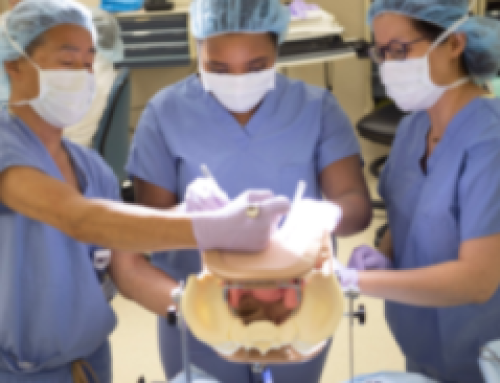
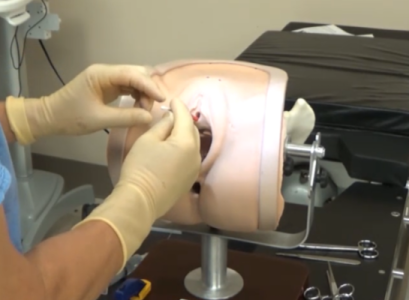
Simulation changes this dynamic entirely. When residents practice procedures on realistic models, such as the Miya Model® that provide immediate feedback, they can make mistakes freely and learn from them in real time. This isn’t just about making errors—it’s about understanding the direct relationship between technique and outcome.
Immediate Consequences Lead to a Better Understanding
Consider a resident learning vaginal hysterectomy. During the procedure, precise identification and clamping of vascular pedicles are essential. In a traditional mentorship model, the attending might guide the resident’s hand, describe the correct plane, and help them avoid complications. The resident learns, but the lesson is largely theoretical until they experience it themselves.
Now imagine that same resident practicing on a simulator where improper technique causes realistic vascular bleeding. The moment their dissection strays from the correct plane, they see blood. The moment their clamp placement is inadequate, the pedicle bleeds. This immediate visual and tactile feedback creates a powerful connection between action and consequence that accelerates learning in several ways:
- Reinforces spatial awareness. Residents quickly learn to recognize the subtle differences in tissue planes and anatomical landmarks because the simulator immediately shows them when they’ve gone too far or not far enough. This instant feedback helps them develop an intuitive sense of anatomy that would take many more cases to acquire in traditional training.
- Builds muscle memory through repetition without risk. A resident can practice the same step ten times in a row, refining their technique with each attempt based on the feedback they receive. Each repetition with immediate consequences strengthens the neural pathways that will guide their hands in the operating room.
- Develops problem-solving skills. When a complication occurs, residents must recognize it and respond appropriately, building the clinical judgment they’ll need in real procedures. The ability to practice managing complications without patient risk creates confident, prepared surgeons.
Learning from Bladder Injuries Without Causing Them
Bladder injuries are among the most common complications in gynecologic surgery, particularly during procedures involving anterior vaginal wall dissection or sling placement. In the operating room, even a minor bladder perforation can extend procedure time, require repair, and necessitate prolonged catheterization for the patient.
In simulation, bladder injuries become valuable teaching moments rather than complications to avoid at all costs. When a resident’s dissection technique is too aggressive or their tissue handling too rough, the simulator can demonstrate a bladder leak. This immediate feedback allows them to understand exactly what went wrong and adjust their approach.
The beauty of this learning process is that residents can experiment with different techniques to understand the boundaries of safe dissection. They can learn what “too much” feels like and looks like, developing an intuitive sense for proper tissue handling that would take many more cases to develop in the operating room alone.
The Faster Learning Curve
Research consistently shows that simulation-based training with immediate feedback produces faster learning curves than traditional methods alone. This makes intuitive sense: when you can see and feel the consequences of your actions immediately, you don’t need to wait for your next case or rely on verbal descriptions to understand what happened.
For procedures involving vascular structures, this accelerated learning is particularly valuable. Residents develop a keen sense for identifying vessels, understanding bleeding patterns, and achieving hemostasis. They learn to recognize when a vessel is about to be compromised before it bleeds, rather than learning to react after the fact.
The confidence that comes from this type of practice is immeasurable. Residents who have experienced complications in simulation enter the operating room with a different mindset. They’re not afraid of potential complications because they’ve already encountered them and know how to respond.
Building Confidence Through Repetition
One of the most significant advantages of simulation with real-time feedback is the ability to practice until you get it right, then practice some more until it becomes automatic. In gynecologic surgery, where procedures like vaginal hysterectomy or sacrospinous ligament suspension require precise movements in confined spaces, this repetition is essential for developing true competence.
Each time a resident practices a procedure, the simulator provides consistent, objective feedback. There’s no variation in anatomy, no unique patient factors to complicate the learning process. This consistency allows residents to isolate specific skills and perfect them before moving on to more complex variations.
Preparing for the Operating Room
Ultimately, the goal of simulation is to prepare residents for the realities of surgical practice. When a simulator can replicate the look, feel, and consequences of real surgical complications, it bridges the gap between theoretical knowledge and practical competence.
Residents who train with high-fidelity simulators that show their mistakes in real time enter the operating room with experience that would otherwise take years to accumulate. They’ve already seen what happens when dissection goes wrong, when hemostasis isn’t adequate, when tissue handling is too aggressive. More importantly, they’ve learned how to prevent these complications and how to manage them when they occur.
A New Standard in Surgical Education
As surgical education continues to evolve, simulation with real-time feedback represents a fundamental shift in how we train the next generation of surgeons. By allowing residents to learn from their mistakes in a safe, supportive environment, we can accelerate their development, improve their confidence, and ultimately enhance patient safety when they enter the operating room.
The future of surgical training is about learning from mistakes as quickly and effectively as possible. With simulators, such as the Miya Model®, that show you your errors as they happen, that future is already here and it is a preferred way of learning: “On a recent satisfaction survey at the end of the Miya Model vaginal hysterectomy simulation, 100% of residents responded with 4 or 5 (1-lowest, 5-highest) to the statements for “Usefulness of the lecture”, “realism of Miya model for VH simulation”, and “Usefulness of the simulation exercise” (Table 4).” – according to the Medical Journal of Obstetrics and Gynecology’s article, “Effectiveness of Simulation Training for Vaginal Hysterectomy (Using a Commercially Available High-Fidelity Model)”. With a realistic simulation model, comprehensive learning and practice are readily available.
Ready to advance your surgical training program? Learn how the Miya Model equips residents with useful skills and confidence they need to excel in the OR and provide outstanding patient outcomes across their entire practice. Contact us today!